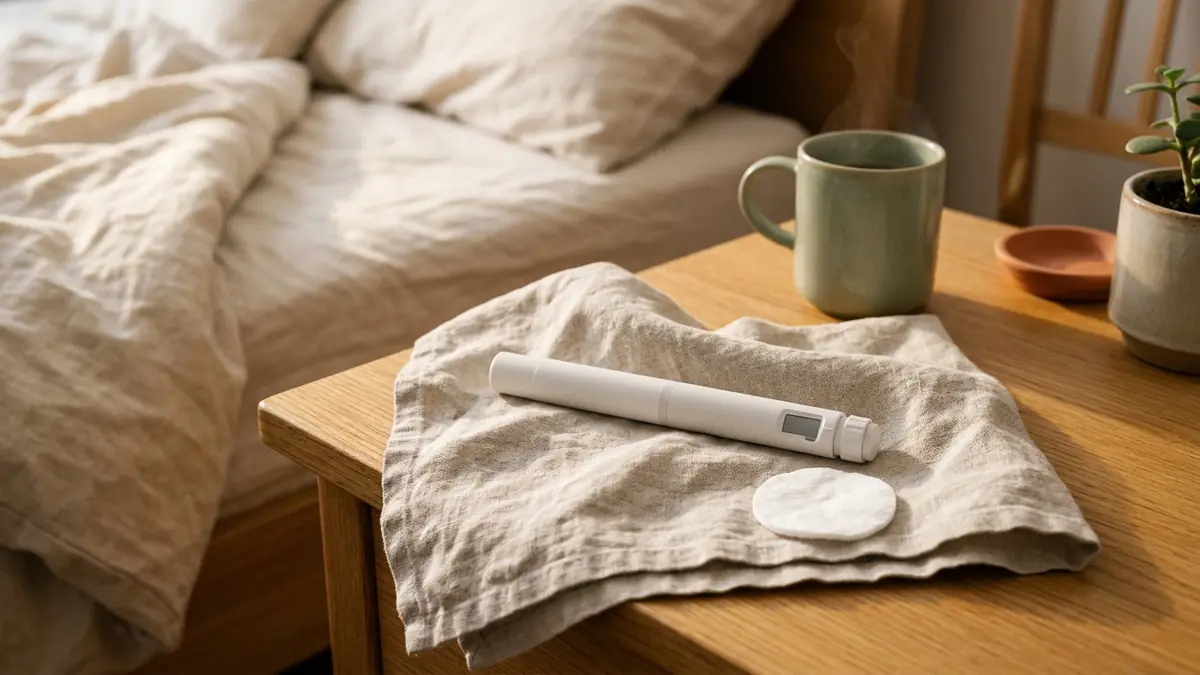
Most people starting semaglutide or tirzepatide experience side effects. That's not a sign something is wrong. It's how these medications work. GLP-1 receptor agonists slow gastric emptying and act on the brain's appetite center, and your body notices both changes. The side effects are real, they're manageable, and they almost always improve over the first 4–8 weeks.
This guide covers what to expect at each stage, which symptoms are normal versus serious, and how the right telehealth clinic can make the difference between successfully pushing through the first month and quitting a medication that could have worked.
By Alexandru Vieru | Independently researched | Last updated: October 2026. Information reflects FDA-approved prescribing information and publicly available clinical guidance.
Disclaimer: Compounded semaglutide and compounded tirzepatide are not FDA-approved. They are prepared by licensed 503A-registered compounding pharmacies under individual prescriptions. This article is educational only. It is not medical advice. Talk to your prescribing clinician before starting, changing, or stopping any GLP-1 medication.
How GLP-1 Medications Work (And Why They Cause Side Effects)
GLP-1 receptor agonists mimic a hormone your gut releases naturally after you eat. That hormone signals your stomach to slow down, tells your pancreas to release insulin, and travels to your brain's satiety centers to reduce appetite. Inject a weekly dose of semaglutide or tirzepatide and your body gets a sustained version of that signal.
The side effects follow directly from the mechanism:
- Gastrointestinal effects (nausea, vomiting, diarrhea, constipation) come from slowed gastric emptying. Food sits in your stomach longer. Your gut isn't used to that.
- Appetite suppression side effects (early fullness, food aversions, loss of interest in eating) come from the brain signaling. Some people find this pleasant. Some find it disorienting.
- Injection-site reactions are local to subcutaneous fat. Redness, mild bruising, or itching at the injection point.
None of these mechanisms are unique to compounded versions of these drugs. Whether you're on brand-name Wegovy, Ozempic, Mounjaro, Zepbound, or a compounded version from a licensed 503A pharmacy, the receptor you're activating is the same. The side effect profile is the same.
The Most Common Side Effects: What's Normal
Nausea (Very Common. Up to 40–50% of Users)
Nausea is the side effect most people fear and the one that causes the most early discontinuations. Here's the reality: it almost always improves.
When it peaks: typically during the first 2–4 weeks at each new dose, then fades as your body adapts. The titration schedule, starting at a low dose and gradually increasing, exists specifically to manage this.
How to reduce it:
- Eat smaller portions, more slowly
- Avoid high-fat, high-sugar, or heavily spiced foods during the adjustment period
- Don't lie down immediately after eating. Give it 30–60 minutes
- Take your weekly injection in the evening so the peak of any nausea hits while you sleep
- Stay hydrated; dehydration makes nausea worse
When to call your clinic: if nausea is severe enough that you can't keep liquids down, or lasts more than a few days at a consistent dose level.
Vomiting (Less Common, Dose-Related)
Vomiting usually occurs in the same window as nausea. Early in a new dose level. It's more common at higher doses, which is another reason the standard titration schedule moves up slowly.
If you're vomiting frequently at a given dose, talk to your prescriber. Going back to a lower dose for an extra 2–4 weeks is a legitimate clinical choice, not a failure.
Diarrhea and Constipation (Common, Can Alternate)
Some people experience loose stools. Others experience constipation. Some experience both on the same week. GLP-1 medications change how fast food moves through your digestive tract, and that change isn't always consistent.
What helps:
- Increase fiber intake gradually (not all at once. A sudden fiber spike can worsen either symptom)
- Stay hydrated. Aim for at least 64 oz of water daily
- A brief daily walk after meals supports gut motility
- For constipation: prune juice, magnesium supplements, or over-the-counter fiber supplements (ask your prescriber first)
Fatigue (Common, Usually Temporary)
Reduced calorie intake plus the body's adjustment to a new metabolic signal means many people feel tired in the first few weeks. This typically improves as the body adapts and as people find a food pattern that keeps energy stable.
What helps: prioritize protein (targets of 100–130 g/day are common in GLP-1 programs), avoid skipping meals entirely, and don't dramatically restrict calories on top of the appetite suppression. The medication is already doing that work.
Headaches (Moderate Incidence)
Headaches are often linked to inadequate hydration or too-rapid calorie reduction rather than the medication itself. The first 2–3 weeks on GLP-1 therapy frequently involve eating far less than usual, and headaches can result.
Track whether your headaches correlate with hydration and food intake. If they persist regardless, flag them at your next prescriber check-in.
Less Common but Important Side Effects
Pancreatitis (Rare. But a Serious Warning Sign)
Acute pancreatitis has been reported with GLP-1 receptor agonists, though the absolute risk in real-world populations is low. It is included in the FDA prescribing information for all approved GLP-1 drugs as a warning to monitor.
The key symptom: severe, persistent abdominal pain that radiates to your back. This is distinct from the mild abdominal discomfort that comes with nausea. Pancreatitis pain is intense and doesn't resolve quickly.
If you have severe abdominal pain: Stop your medication and seek emergency care immediately. This is not a "wait and see" symptom.
A personal or family history of pancreatitis or gallbladder disease is typically a reason your prescriber would ask about before starting GLP-1 therapy.
Gallbladder Issues (Rare, Dose-Dependent)
Gallstones and gallbladder inflammation have been reported with GLP-1 medications, particularly at higher doses. Rapid weight loss in general (from any cause) increases gallstone risk, so this may be partly a weight-loss effect rather than a direct drug effect.
Symptom to watch: pain in the upper right abdomen, especially after meals. Report it to your prescriber promptly.
Heart Rate Increase (Mild, Common)
A small increase in resting heart rate, typically 2–4 beats per minute on average, is a known effect of GLP-1 receptor agonists. For most people this is not noticeable and clinically insignificant. If you have a pre-existing heart condition, discuss this with your prescriber before starting.
Muscle Loss (Risk With Rapid Weight Loss)
This isn't a direct side effect of the medication, but it's a real risk when appetite suppression leads to very low protein intake. Losing significant weight quickly without adequate protein and resistance exercise means losing muscle alongside fat.
The practical response: high protein targets (most GLP-1 programs recommend 0.7–1.0 g per pound of body weight), and some form of resistance exercise. Your clinic should be discussing this with you. It's a sign of how seriously they take clinical outcomes versus just filling prescriptions.
Tirzepatide vs. Semaglutide: Side Effect Differences
Tirzepatide (the active ingredient in Mounjaro, Zepbound, and compounded versions) acts on two receptors. GIP in addition to GLP-1. This dual mechanism tends to produce slightly stronger appetite suppression and, for many people, better weight loss results. But also a somewhat higher rate of GI side effects at the start of each dose increase.
In practical terms:
- Both cause nausea, vomiting, diarrhea, and constipation
- Tirzepatide tends to produce more pronounced appetite suppression (which some people love, others find difficult)
- Semaglutide has a more established real-world track record. It's been in clinical use longer
- The titration schedules for both are designed to minimize early side effects; slower titration is always an option if you're struggling
If you're unsure which is right for you, the Semaglutide vs. Tirzepatide comparison breaks down the differences in more detail.
When to Stop Immediately: Serious Warning Signs
These symptoms require stopping the medication and seeking care right away. Don't wait for your next scheduled check-in:
| Symptom | What It Could Signal |
|---|---|
| Severe abdominal pain, radiating to the back | Pancreatitis |
| Swelling of face, lips, tongue, or throat; difficulty breathing | Serious allergic reaction |
| Rapid heart rate, chest pain, or shortness of breath | Cardiac event (seek emergency care) |
| Symptoms of low blood sugar if also on insulin or sulfonylurea | Hypoglycemia |
| Vision changes | Possible diabetic retinopathy complication (if you have type 2 diabetes) |
| Lump or swelling in the neck; difficulty swallowing | Thyroid concern (GLP-1 drugs carry a class warning for thyroid C-cell tumors in animal studies) |
The thyroid warning appears in all GLP-1 prescribing information as a black-box warning, derived from rodent studies. While no causal link has been established in humans, anyone with a personal or family history of medullary thyroid carcinoma or Multiple Endocrine Neoplasia syndrome type 2 should not use GLP-1 medications. Your prescriber should have screened for this.
How to Minimize Side Effects: A Practical Protocol
The first 4–8 weeks are the hardest. Here's what works:
Week 1–4 (Starting Dose)
- Take your weekly injection on the same day and time each week
- Inject in the evening if nausea is your main concern
- Eat 3–4 smaller meals rather than 2 large ones
- Cut alcohol, fried foods, and heavy cream sauces until nausea settles
- Aim for 8+ glasses of water daily
- Keep your protein high. This maintains energy and muscle mass
When You Dose Up
- Every dose increase brings a potential recurrence of early symptoms. Usually milder than the first time
- Give yourself 4–6 weeks at each dose level before assuming a dose isn't working
- Ask your prescriber about slowing the titration if side effects are severe. Going from monthly to every 6–8 weeks per step is a legitimate option
Ongoing
- Track what you eat on rough days. Specific foods (greasy, spicy, high-sugar) consistently worsen GI symptoms on GLP-1 therapy
- Resistance training 2–3 times per week protects muscle mass during weight loss
- Regular check-ins with your prescriber (monthly at minimum) matter; don't go silent when you're struggling
What Your Clinic Should Be Providing
Side effect management is where the quality difference between GLP-1 clinics becomes most visible. A clinic doing this right will:
- Adjust your dose if side effects are severe, rather than pushing you to the next tier on schedule
- Check in with you proactively at each dose level. Not just wait for you to contact them
- Provide dietary and lifestyle guidance (not just prescription fulfillment)
- Have a clinician available for urgent questions. Not just a chat bot or a 72-hour email queue
- Discuss pancreatitis and serious warning signs before you start, not after
When we evaluate clinics in our GLP-1 ranking, clinical oversight accounts for 30% of the total score. More than any other factor. It matters most precisely in the scenario described above: something feels wrong at week 3 and you need a real answer fast.
Our partner clinics, in order of our overall score (clinical oversight is 30% of it):
Our partner clinics, in order of our score. Each price is the clinic's lowest published plan, read on its own pages, with its plan length. It can be for a different medication or form than the one in this article. We may earn a commission if you sign up through a partner button; it never changes a score or this order.
 7.9/ 10Our scoreFrom $247/mo from month 2 ($147 first month)Verified 2026-11-02Visit →Read reviewAffiliate link
 7.8/ 10Our scoreFrom $97/mo on a 12-month plan ($1,163 billed yearly; $165/mo month to month after a $99 first month)Verified 2026-11-05Visit →Read reviewAffiliate link
BbmiMD
7.6/ 10Our scoreFrom $119/mo on a $1,428 prepaid yearVerified 2026-11-02Visit →Read reviewAffiliate link Welludr (formerly Wellmedr)7.6/ 10Our scoreFrom $41/mo on a monthly plan at a Pre-Black Friday sale price, shipped every 4 weeksVerified 2026-11-04Visit →Read reviewAffiliate link
MMEDGm
7.6/ 10Our scoreFrom $169/mo on a 12-month plan paid upfront ($2,028)Verified 2026-11-02Visit →Read reviewAffiliate link
Compounded semaglutide and tirzepatide are not FDA-approved; these are compounded medications prepared by licensed pharmacies for individual prescriptions.
If budget is your primary concern, see our cheapest GLP-1 options. But make sure whatever clinic you choose has a real process for handling side effect questions, not just a prescription-refill service.
FAQ: GLP-1 Side Effects
How long do GLP-1 side effects last? The most common GI side effects (nausea, diarrhea, constipation) peak in the first 2–4 weeks at each dose level and typically improve significantly after 4–8 weeks total. Most people find that by week 8–12, nausea is mild or gone. Appetite suppression and the core therapeutic effects continue.
Will I always feel nauseous on semaglutide or tirzepatide? No. Nausea is most common during dose increases and in the first weeks. The titration schedule is specifically designed to minimize it. Many people are virtually nausea-free by the time they reach their maintenance dose.
Can I take anti-nausea medication while on GLP-1 therapy? Some people use over-the-counter options like ginger supplements or, in cases of severe nausea, prescription anti-emetics. Talk to your prescriber before adding anything. They can recommend what's appropriate and flag any interactions.
What foods should I avoid on semaglutide or tirzepatide? High-fat, high-sugar, and heavily processed foods consistently worsen GI side effects. Alcohol can also worsen nausea and interact with blood sugar regulation. Keep meals smaller and simpler, especially in the first 4–8 weeks.
Is it normal to lose my appetite completely? Significant appetite suppression is expected. That's part of how GLP-1 medications work. What's not ideal is losing interest in eating so completely that you're not hitting your protein targets. If you're struggling to eat 70–80 g of protein per day, flag it to your prescriber; a dose adjustment or dietary guidance may help.
Do side effects get worse as the dose increases? Each dose increase can bring a temporary return of early symptoms. Usually milder than the first time. Many people barely notice the step up to higher doses. If dose increases are consistently intolerable, talk to your prescriber about a slower titration schedule.
Are side effects different on compounded vs. brand-name GLP-1? The active pharmaceutical ingredients are the same. The formulation (base, preservatives, concentration) can vary between compounding pharmacies, and some people report differences. But there's no evidence of systematic differences in side effect rates. The quality of your compounding pharmacy matters; clinics in our ranking use licensed, HIPAA-compliant 503A pharmacies.
Bottom Line
GLP-1 side effects are real, predictable, and manageable. Nausea and GI disruption hit most people hard in the first 4–8 weeks, then ease substantially. The difference between people who push through successfully and those who quit is usually a combination of realistic expectations, smart dietary adjustments during the ramp-up period, and a clinic that actually responds when something feels wrong.
For specific medications and situations, our side effects and safety guides cover oral semaglutide, the first month of treatment and how to spot scam sellers. Before you start, review what to look for: see our GLP-1 Buyer Safety Hub for the full checklist of what legitimate, high-quality clinics do differently. And if you're comparing options, our full GLP-1 clinic ranking shows clinical oversight scores for every provider we've evaluated. Scored independently, with evidence, before anyone earns a commission.
Affiliate disclosure: We earn a commission if you sign up through links on this page. Scores remain evidence-based; active partners are listed first at equal displayed scores. See our affiliate disclosure and editorial policy.